
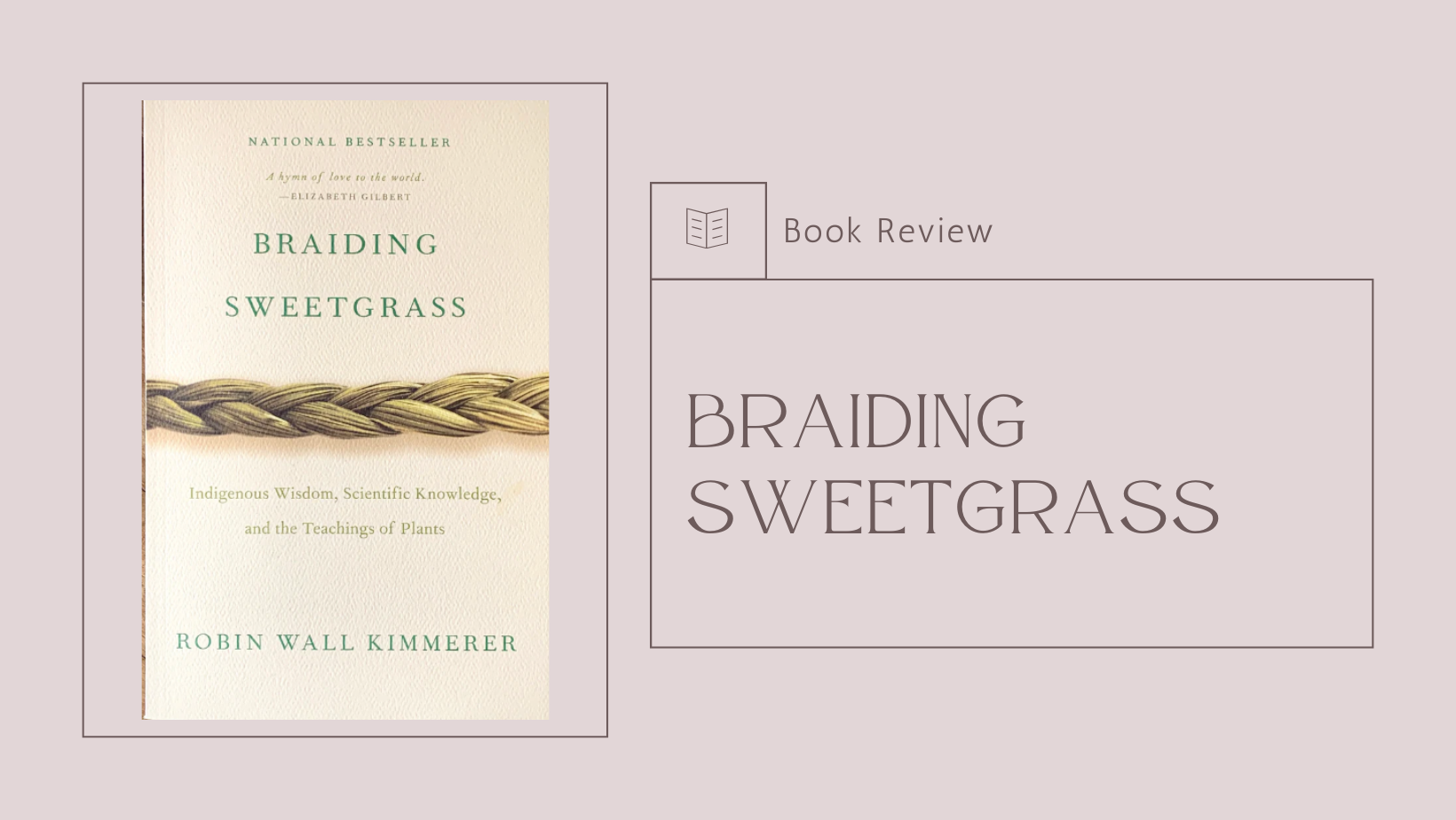
Braiding Sweetgrass
Robin Wall Kimmerer, a citizen of the Potawatomi Nation, is a decorated professor and botanist. She’s written several books about botany and Indigenous wisdom, but Braiding Sweetgrass is one that everyone and their mother seem to have read. It definitely makes sense why it’s received the hype and attention it has, though. The world is on fire around us and we’re seeing those in power do literally nothing to stop it. Plus, Robin has a very kind voice and though out responses to the challenges that surround us.
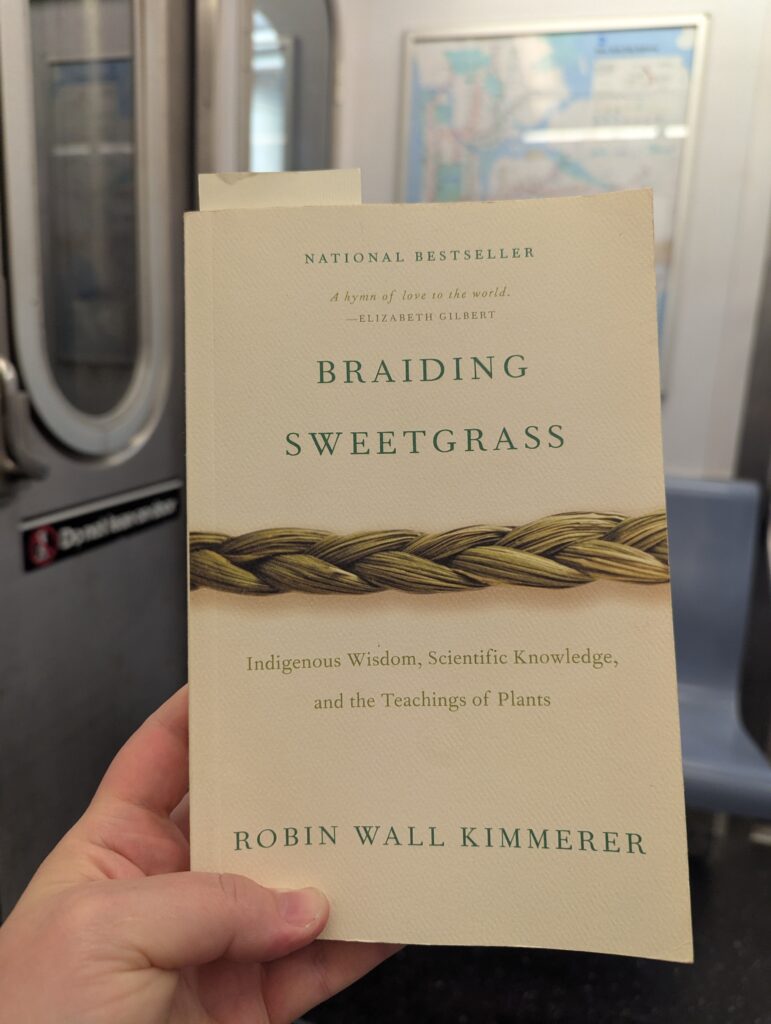
I recently finished reading Braiding Sweetgrass, and I have a lot of thoughts about it. But first, let’s chat about what it’s actually about:
The Plot
Robin combines her experiences as an indigenous scientist, mother and woman to tell the story. A major point she highlights is how all organisms are connected, and that we have a reciprocal relationship with the land around us. Unfortunately, many of us have forgotten how to listen to the land and aim to control it rather than work with it.
In each chapter, she gives personal anecdotes that drive home the message she’s telling. These personal touches really help bring the story home and clearly show how we’re all impacted, whether we realize it or not.
While there is a lot to criticize when it comes to how we’ve treated the land, organisms and people of the world throughout history, there is much to celebrate and be thankful for as well. With her stories, she tells honest experiences which include the good, the bad and the ugly.
Robin really drives home throughout the book that we must understand where we come from and find ways to live more sustainably in order to be stewards of the land. And this is told perfectly by the sentiment of the final chapter, which is about defeating the Windigo, a creature that represents the greedy nature of humans and capitalism. This sentiment really drives home that we can actually change — we just need to start.
Was the Book Good/Bad?
If you talk to anyone who has read this book, they’ll either tell you that it changed their life or that they didn’t finish it. And as someone who just finished the book, I can totally see both sides. It did take me a looooooong time to read this. It was not something I could just pick up and read through.
As I was reading this, I found that there were many moments of great storytelling that taught me something new or phrased my feelings in a way that I’d never been able to before. But then there were other parts where I was literally falling asleep while reading. I found that those were the times when she was a little bit repetitive and dove a little too much into a story in a way that wasn’t helpful for the point.
I feel like the sentiment of the book is a clear 5/5, but I wouldn’t rate this more than 3.75/5 given the struggle I had getting through parts and the repetition. I do recommend reading this book if you’re willing to put in the time and are open to her style of writing (i.e., a semi-conversational lecture).